

Why get Vaccinated?
Vaccination is a crucial public health tool that protects individuals and communities from infectious diseases. By stimulating the body’s immune system to recognize and fight specific pathogens, vaccines help prevent illnesses. They not only protect those who receive them but also contribute to herd immunity, reducing the spread of disease among people who cannot be vaccinated due to medical conditions.
Widespread vaccination has led to the eradication or significant decline of many deadly diseases, saving millions of lives each year. Therefore, staying up to date with recommended vaccines is essential for both personal health and the well-being of society.

What is Shingles?
Also known as Herpes Zoster, it is a viral infection caused by the same virus that causes chickenpox (varicella).
Varicella-zoster virus (VZV) usually “sleeps” in our nerve cells after we recover from a chickenpox episode. This same virus will “awaken” when the time is right!
Shingles can spread if blisters are broken and a susceptible person (someone who has never had chickenpox or who is already ill) is close by. It is much less contagious than chickenpox.
Who is at risk of severe illness?
-
Shingles can occur at any age. However, risk of shingles is higher in people:
-
aged over 50 years
-
Babies
-
Pregnant women who never had chickenpox or chickenpox vaccine
-
Individuals with weakened immune system
-
Individuals with medical conditions like diabetes, chronic kidney disease, and lung disease may increase the risk.
-
-
About 1 in 3 people will develop shingles at some stage during their lifetime.
What causes a weakened immune system?
-
Stress
-
Illness that weakens the immune system such as diabetes, cancer (e.g leukemia, a lymphoma) or AIDS
-
On treatments that suppress the immune system, chemotherapy and drugs taken to prevent organ rejection

How does the virus present?
It initially presents as burning pain or tingling sensation, or extreme sensitivity in one area of the skin, a painful, blistering rash on any part of your body.

What are the complications from Shingles?
-
Post-herpetic neuralgia: a condition in which constant or episodic pain persists for a long time after the skin has healed.
-
Bacterial infection of the blisters which lead to delayed healing of the skin and may need antibiotics.
-
Rarely, the disease may spread all over the body in very serious cases.
Prevent spreading the virus to others
-
Cover the rash
-
Avoid touching or scratching the rash
-
Wash your hands often for at least 20 seconds
-
Avoid contact with the following people until your rash scabs over
-
Pregnant women who never had chickenpox or chickenpox vaccine
-
Premature or low birth weight infants
-
People with weakened immune systems
-
Are there any treatments?
There is no cure for shingles, but there are treatments for shingles. It usually comprises pain relief / fever medications, oral and/or topical anti-viral medications.
Starting antiviral therapy within 3 days of the rash appearing can reduce the severity of your symptoms and the risk of further complications.
How to cope with my rashes?
-
Keep your rash dry and clean. After a bath or shower, dry your rash gently.
-
Do not scratch your rash
-
Wearing loose fitting clothes
-
Use a cooled towel on the affected areas
-
Cover your rash by using a non-stick dressing if the area isn’t covered by light clothing.
-
Avoid antibiotic creams, gels, and sticking plasters (Band Aids) on the blisters as these may slow down the healing process.

Can shingles be prevented?
-
Getting vaccinated against shingles reduces your chance of developing the condition. Vaccination does not guarantee that you won’t get shingles, but it will reduce your chance of developing the condition.
The shingles vaccine (Shingrix) is recommended for:-
Everyone aged 50 years and over
-
Especially those who live in the same household as someone who has a weakened immune system
People aged 18 years or older with a weak immune system
-
How often should I vaccinate?
You only need 2 doses of the vaccine. For most individuals, the first dose will be given on your first visit and followed by the second dose 2-6 months later.
For individuals who are or will be immunodeficient or immunosuppressed, the first dose on your first visit and followed by a second dose 1 to 2 months later.
From September 2025, Shingrix will be included in the National Adult Immunization Schedule in Singapore
Subsidies available for eligible Singaporeans and Permanent Residents in recommended groups, including those aged 60 and older, and immunocompromised adults aged 18 to 59.
Latest Update!
Eligible Singaporeans can expect to pay around S$17 (US$13) to S$68 for a complete single-dose course of PCV20 at Community Health Assist Scheme (CHAS) general practitioner (GP) clinics, said MOH. The vaccine’s cost will depend on their CHAS card status or whether they are a Pioneer Generation or Merdeka Generation senior. Healthier SG Singaporean enrollees will be fully subsidized at their enrolled clinic.
Shingrix, the only HSA-registered vaccine for shingles protection, will also be included in the NAIS from Sep 1, said MOH. Its inclusion was first announced in February.
Shingrix is recommended for all adults aged 60 years and above, as well as immunocompromised adults aged 18 to 59 years.
“It is recommended as a single course of two doses, with an interval of two to six months between the doses,” said MOH.
From mid-2026, MediSave500/700 will be usable to cover the post-subsidy cost of PCV20 and Shingrix, said the health ministry.
“Seniors aged 60 years and above who are eligible for the vaccines may also use Flexi-MediSave.”
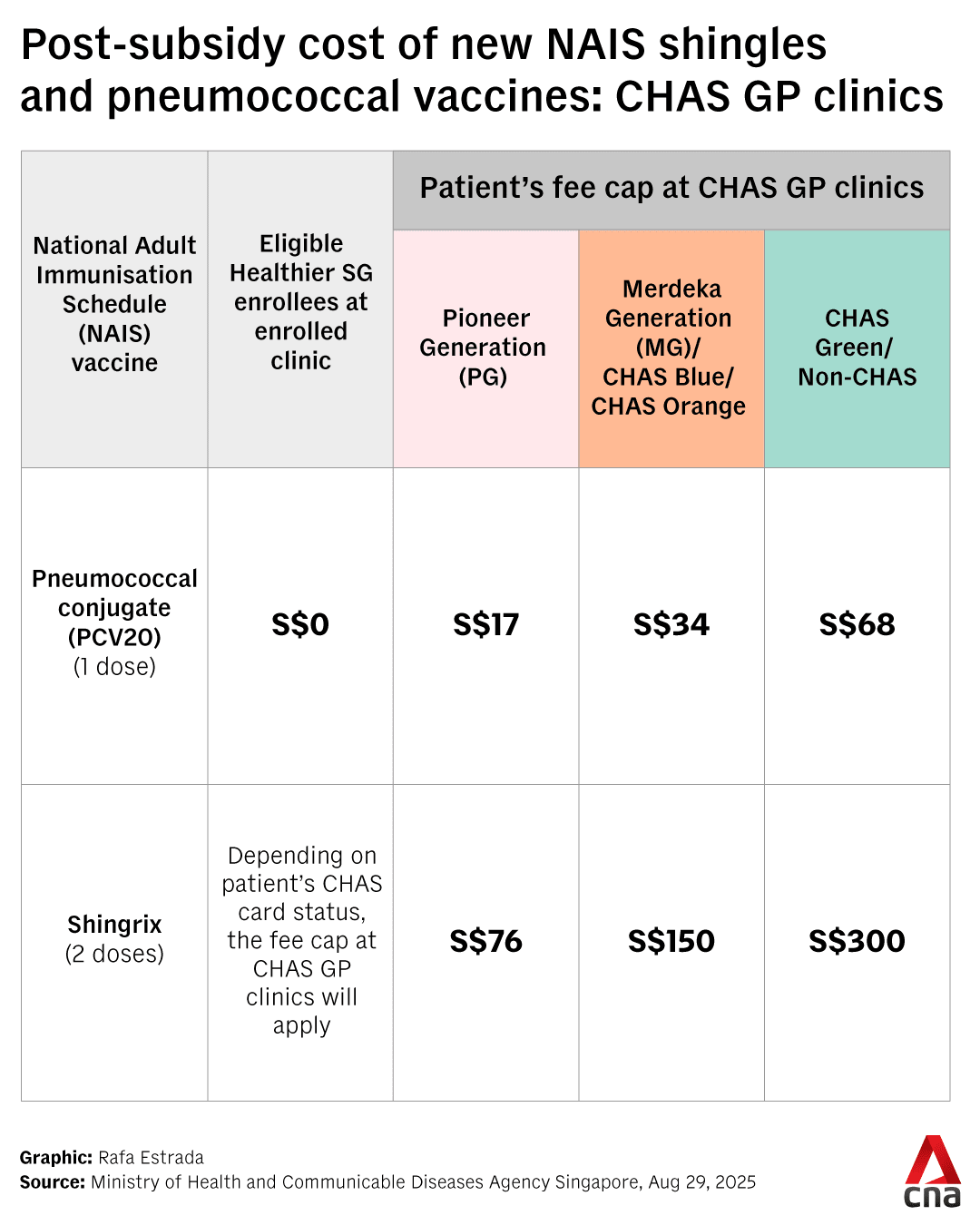
Resources: https://www.channelnewsasia.com/singapore/moh-subsidies-pcv20-medisave-september-chas-vaccine-5322056
Book your appointment today with Beacon Medical Clinics!
Connect with us: @beaconmedicalclinicgroup
Website: www.beaconmedical.com.sg
Written by: Dr Lai Kah Ho


Leave A Comment