

Why vaccinate?
Vaccination is a crucial public health tool that protects individuals and communities from infectious diseases. By stimulating the body’s immune system to recognize and fight specific pathogens, vaccines help prevent illnesses. They not only protect those who receive them but also contribute to herd immunity, reducing the spread of disease among people who cannot be vaccinated due to medical conditions.
Widespread vaccination has led to the eradication or significant decline of many deadly diseases, saving millions of lives each year. Therefore, staying up to date with recommended vaccines is essential for both personal health and the well-being of society.
What is Pneumococcal Disease?
Pneumococcal disease (PD) is caused by a bacterium called Streptococcus pneumonia, which is also known as pneumococcus.
It affects people of all ages. It is common for people, especially children, to carry pneumococcus in their nose and throat.
The bacteria can spread from person to person by:
-
Direct contact
-
Droplets from an infected person through coughing or sneezing
-
Articles contaminated with infected droplets
Is it dangerous?
Not everyone exposed to the bacteria develops the disease. Some people become carriers, while others progress to develop the infection. Depending on the systems affected, it can lead to severe complications such as pneumonia, meningitis, sepsis, or even death. Pneumonia is currently the 2nd leading cause of death in Singapore.
Who is at risk of severe illness?
-
Persons aged 65 years or older;
-
Infants and young children;
-
Adults and children who have chronic pulmonary or cardiovascular disorders; chronic metabolic diseases, renal, neurologic, hepatic, or hematological disorders
Are there any treatments?
Treatment usually involves symptomatic treatment with antipyretics, antihistamines, plenty of fluids, and adequate bed rest. Also prompt treatment with antibiotics, such as penicillin, is usually effective.
How do I protect myself?
-
There are few types of vaccinations available: PCV 10, PCV 13, PCV 20, PPSV 23.Pneumococcal vaccination is recommended for:
-
Young children
-
Elderly (65 years old and above)
-
Other high risk individuals.
-
How often should I vaccinate?
-
The frequency of pneumococcal vaccination depends on your age, health status, and vaccination history:
-
For Adults (65 and older):
-
One dose of PCV20
-
OR, if PCV13 is given, it should be followed by one dose of PPSV23 at least 1 year later.
-
-
For Adults (18–64) with certain health conditions:
-
One dose of PPSV 23 followed by PCV13 at 65 years old and another dose of PPSV23 one year after PCV13.
-
One dose of PSV20 with no prior vaccines
-
Most people need only one full series in their lifetime.
For Children:
Typically receive 3 doses of PCV13 at 4, 6, and 12 months.
-
Latest Updates!
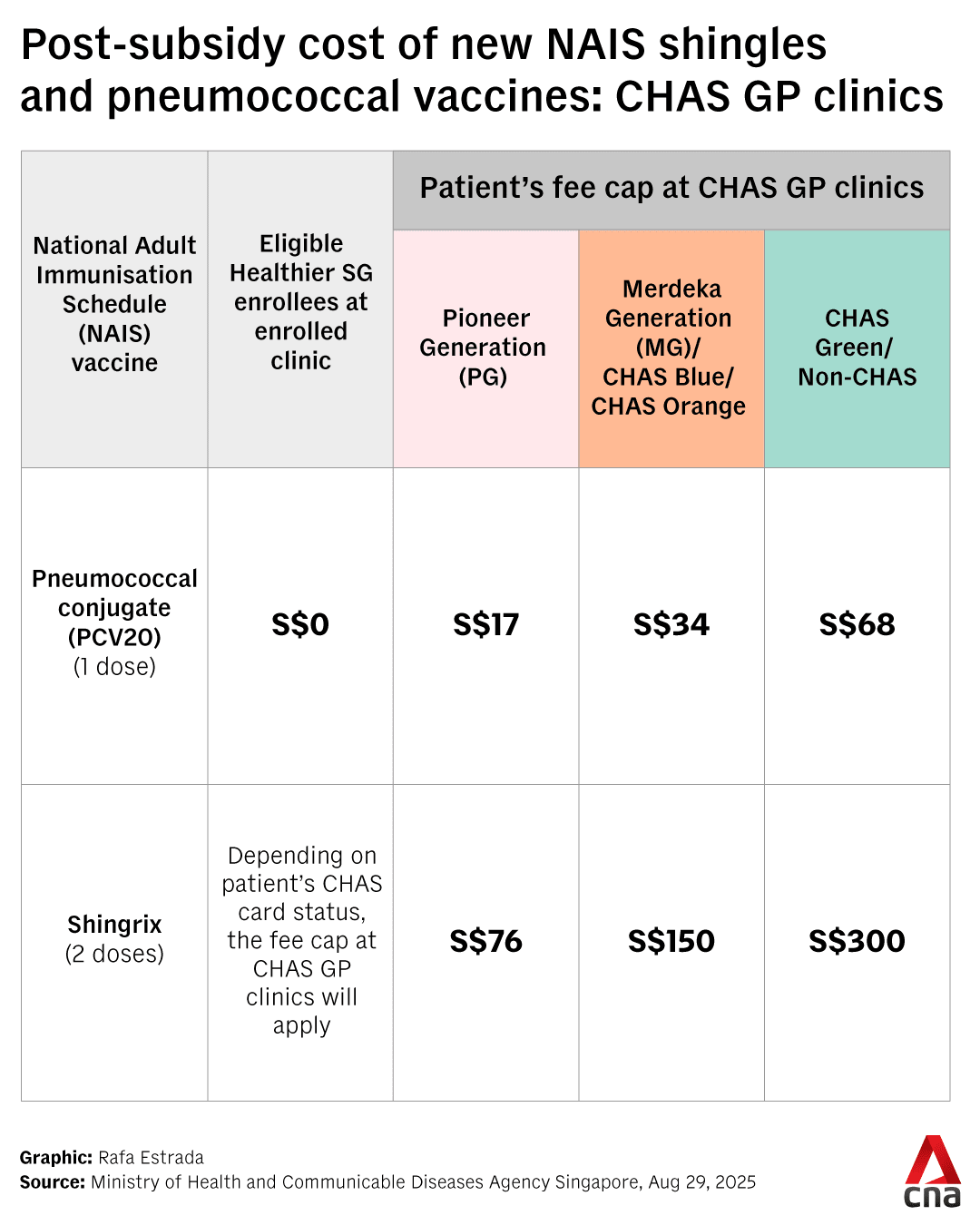
Eligible Singaporeans can expect to pay around S$17 (US$13) to S$68 for a complete single-dose course of PCV20 at Community Health Assist Scheme (CHAS) general practitioner (GP) clinics, said MOH. The vaccine’s cost will depend on their CHAS card status or whether they are a Pioneer Generation or Merdeka Generation senior.
Healthier SG Singaporean enrollees will be fully subsidized at their enrolled clinic.
“PCV20 is recommended for all adults aged 65 years and above, as well as adults aged 18 to 64 years who are at increased risk of developing severe pneumococcal disease,” said MOH.
Individuals who have received PCV13 and/or PPSV23 may wish to consult their doctor on the need for the vaccine, it added.
“In general, there is no recommendation for persons aged 65 years and above who have completed their PCV13 and PPSV23 regimen to receive PCV20.”
Resources: https://www.channelnewsasia.com/singapore/moh-subsidies-pcv20-medisave-september-chas-vaccine-5322056
Book your appointment today with Beacon Medical Clinics!
Connect with us: @beaconmedicalclinicgroup
Website: www.beaconmedical.com.sg
Written by: Dr Lai Kah Ho


Leave A Comment